
Cache Update Release: Everything You Need to Know

.webp "cache update")
Key Facts at a Glance
Introduction: Cache Returns to Counter-Strike 2
On April 28, 2026, Valve released one of the most anticipated updates in Counter-Strike 2 history. Cache, one of the most iconic maps in the franchise, is officially back. After more than seven years off the Active Duty rotation, the map has been fully rebuilt for the Source 2 engine and is now available in Competitive, Casual, Deathmatch, and Retakes modes.
This is not a minor cosmetic refresh or a community workshop port. Valve purchased the rights to Cache from its original creator, Shawn “FMPONE” Snelling, in May 2025 and rebuilt the entire map from the ground up. The result is a version of Cache that preserves the layout and strategic identity that made the original great while leveraging Source 2’s capabilities for improved lighting, visibility, and performance.
For the professional Counter-Strike community, this update carries significant implications. Cache was a staple of the competitive map pool from 2014 to 2019, featured in every Major during that period. Its return to CS2 signals that Valve is committed to expanding the map pool, and community speculation about which map Cache will replace in the Active Duty rotation is already intense.
As someone who has managed competitive rosters through multiple map pool changes, I can tell you that a new map entering the rotation is one of the most disruptive and exciting events in professional Counter-Strike. It reshuffles the competitive landscape, rewards teams that adapt quickly, and punishes those that fall behind. Cache’s return is not just nostalgia. It is a strategic earthquake.
Status of Cache in CS2: Confirmed, Live, and Expanding
As of April 30, 2026, Cache is confirmed and live in CS2. It is available in Competitive matchmaking, Casual, Deathmatch, and Retakes. It is not yet available in Premier mode, which uses the Active Duty map pool exclusively. Valve has not officially announced when Cache will enter the Active Duty rotation, but the community consensus and reporting from multiple esports outlets point to an expected addition after the IEM Cologne Major 2026, coinciding with the start of CS2 Premier Season 5.
FACEIT moved faster than Valve. On April 15, FACEIT ran a community vote asking players to choose between Cache, Train, and Vertigo for addition to their platform. Cache won overwhelmingly, receiving 148,840 votes. It went live on FACEIT servers on April 22, a full week before Valve’s official update. The demand was so high that it reportedly caused queue instability on FACEIT’s infrastructure, a testament to just how eagerly the community had been waiting.
The Full Timeline: How Cache Came Back
-(1).webp "cache Full Timeline")
Understanding Cache’s return requires understanding the full arc of its history across Counter-Strike.
Cache in Source 2: What Changed
Visual Overhaul and Lighting
.webp "cache Visual Overhaul and Lighting")
The most immediately noticeable change is the lighting. Cache in CS2 is significantly brighter than any previous version. The dark corners that caused frustration in CS:GO, particularly around A main, B halls, and areas of mid, have been eliminated. Source 2’s global illumination system creates more natural light distribution, which means player models are easier to spot against backgrounds. For competitive play, this is a massive improvement.
The art direction returns to the Chernobyl-inspired aesthetic of the original Cache rather than the divisive green palette FMPONE introduced in 2019. The map feels overgrown, abandoned, and post-apocalyptic, consistent with its nuclear exclusion zone theme. Concrete surfaces, rust, vegetation creeping through structures, and atmospheric haze all contribute to a map that is both visually striking and competitively readable.
Layout and Structural Changes
Valve preserved the fundamental layout of Cache. The core callouts, site positions, and rotation timings remain intact. Teams and players familiar with Cache from its CS:GO era will recognize everything immediately. That said, there are notable adjustments designed to suit CS2’s physics engine and current meta.
The door on A site no longer breaks, which is a significant change for both attackers and defenders. In CS:GO, the destructible door created dynamic gameplay but also introduced randomness that competitive players debated for years. Valve appears to have decided that a consistent, non-breakable door provides cleaner gameplay. There are also minor geometry adjustments to mid and B site to better accommodate Source 2’s movement physics. The mid-CT window has been replaced with a small gap that allows smoke and flash deployment from both sides, a subtle but tactically meaningful change.
Performance
Multiple community reports and early testing indicate that Cache runs exceptionally well on Source 2. Frame rates are stable and notably better than the FMPONE workshop version that preceded it. For a map that will eventually enter the competitive rotation, performance stability is non-negotiable, and Valve appears to have delivered.
The s1mple Graffiti Question
.webp "s1mple graffiti question")
One of the most discussed community details is the absence, at launch, of s1mple’s graffiti on B site. The graffiti commemorates his legendary falling AWP no-scope during ESL One Cologne 2016 against Liquid. It was added to Cache in CS:GO after the clip went viral and became one of the most iconic moments in Counter-Strike history. As of the April 29 update, the graffiti has not been included in the CS2 version. Whether Valve will add it in a future patch remains unknown, but community sentiment strongly favors its return.
Cache in CS:GO vs. CS2: Side-by-Side Comparison
Cache and the Competitive Map Rotation
How the CS2 Map Pool Works
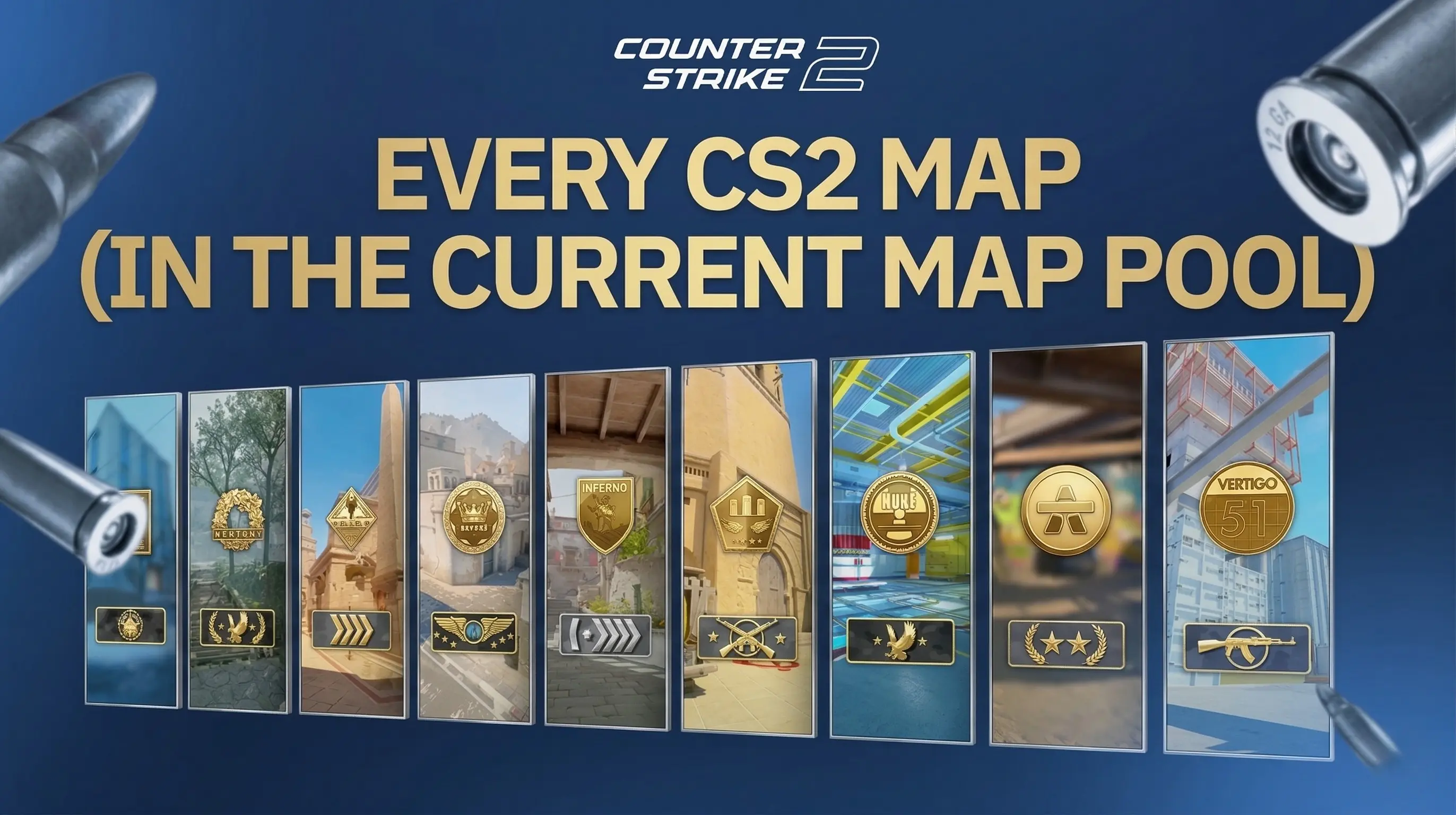
The CS2 map pool operates on a system of Active Duty maps, which are the seven maps available in Premier mode and used in professional tournaments. As of April 2026, the Active Duty pool consists of Inferno, Mirage, Nuke, Overpass, Ancient, Anubis, and Dust II. These maps are the only ones available for Premier matchmaking and are the standard for all major esports events.
Below the Active Duty pool, maps can exist in Competitive mode (where players queue for specific maps) without being part of the professional rotation. This is where Cache currently sits. It is playable in ranked Competitive matchmaking but not in Premier or professional play.
When Will Cache Enter Active Duty?
Valve has not made an official announcement, but the expected timeline, based on reporting from TalkEsport, Hotspawn, and community analysis, points to Cache entering the Active Duty pool after the IEM Cologne Major 2026, which would align with the start of CS2 Premier Season 5. This approach is consistent with Valve’s historical pattern of making map pool changes between Major cycles to avoid disrupting ongoing tournament preparation.
Which Map Gets Dropped?
This is the question that has the community split. Cache’s addition to Active Duty would require removing one of the current seven maps, unless Valve decides to expand the pool to eight, which would be unprecedented. The most commonly discussed candidates for removal are Mirage, Ancient, and Dust II. Community sentiment on HLTV forums has leaned toward replacing Mirage or Dust II, with several comments advocating for simply expanding the pool rather than removing any map. Valve has not provided any indication of their plans.
Changes to Active Duty Map Rotation: Historical Context
Valve has always approached map pool changes conservatively. The Active Duty pool has typically remained at seven maps, with changes occurring once or twice per year. Major additions and removals have historically happened between Major cycles to give professional teams time to adapt.
Impact of Cache’s Return on Esports
How Map Pool Updates Reshape the Professional Scene
A new map entering the Active Duty pool is one of the most consequential changes that can happen in professional Counter-Strike. It immediately affects every team’s veto strategy, practice allocation, and roster composition. Teams that have Cache experience from the CS:GO era will have a head start, but the Source 2 version’s changes mean that old utility lineups and timings will need to be relearned from scratch.
For teams like Vitality, Spirit, and FaZe, who dominate the current map pool, Cache represents a potential vulnerability. None of these rosters have recent competitive experience on the map, which levels the playing field and creates opportunities for dark-horse teams that invest heavily in Cache preparation. From a team manager’s perspective, the window between Cache’s Competitive launch and its expected Active Duty addition is critical. Teams that start practicing Cache now, before it becomes mandatory, will have a meaningful advantage.
Criteria Developers Use for Map Selection
Valve has never published formal criteria for map selection, but the patterns are clear. Maps that enter the Active Duty pool tend to share several characteristics: balanced win rates between CT and T sides, a layout that rewards both individual skill and team coordination, strong spectator readability for broadcast, and consistent performance across different hardware configurations.
Player Adaptation to Map Pool Changes
Professional players respond to map pool changes differently depending on their role and team structure. AWPers need to learn new angles and timing windows. Entry fraggers need to understand site-take routes and common defensive positions. IGLs need to develop entirely new playbooks. For a map like Cache, where mid control is the central strategic battleground, teams with strong mid-round calling and flexible rotators will have an advantage.
The adaptation period is typically three to six weeks before teams reach a baseline level of competence, and three to six months before fully polished strategies emerge. This is why Valve’s decision to add Cache to Competitive before Active Duty is smart: it gives the entire player base, from casual to professional, time to learn the map before it becomes mandatory.
Version History of Cache Across Counter-Strike
Full April 29, 2026 CS2 Patch Notes
The Cache update was the headline, but the April 29 patch included several other changes worth noting.
Cache
Added Cache to Competitive, Casual, Deathmatch, and Retakes modes. Full Source 2 rebuild with improved lighting, visibility, and art direction. Core layout preserved with minor geometry adjustments to mid and B site. A site door is now non-breakable.
Dust II
Uncovered Mid Box (Xbox) to reveal a previously hidden jump spot. Valve’s patch notes state this was done “on purpose this time,” a reference to a previous accidental change that was reverted. The exposed Xbox restores an old movement option for early mid control and catwalk access.
Office
Enabled collision on tarp on boxes around CT spawn, resolving an issue where players could clip through surfaces.
Workshop Maps
Stronghold and Poseidon both received minor updates and refreshes.
Technical
Minor Animgraph 2 tweaks, sound fixes, and bug corrections were included. An audio bug on Cache has been reported by the community and is expected to be patched in a follow-up update.
Community Feedback and Reception
The community response to Cache’s return has been overwhelmingly positive. HLTV forum comments praised the visual quality, with one user calling it “one of the best maps Valve has ever recreated.” The Chernobyl aesthetic, improved lighting, and clean visual readability have all been highlighted as improvements over both the original and the FMPONE 2019 rework.
Reddit discussion on r/GlobalOffensive and r/cs2 has focused on two primary topics: which map should be removed from Active Duty to make room for Cache, and whether the s1mple graffiti will be added in a future update. There is also an active debate about whether Valve should expand the Active Duty pool to eight maps rather than dropping an existing one.
The only significant criticism has been an audio bug reported on Cache that affects sound propagation in certain areas of the map. Community members expect Valve to address this in a hotfix. Otherwise, the reception has been as positive as any map update in CS2’s history.
Why Cache Matters: A Strategic Perspective
Cache is not just another map. It is a tactical masterpiece that rewards intelligent play, team coordination, and mid-round decision-making. Its design centers around mid control, a contested area that both teams fight over from the opening seconds of every round. Winning mid on Cache opens up rotational options, allows for split executes on both bomb sites, and provides critical information about the opponent’s setup.
For teams with strong IGLs and flexible rotators, Cache is a dream map. It rewards the kind of deep tactical preparation that separates top-tier teams from the rest. For individual players, it provides clear skill expression through its long sightlines, fast-paced A site fights, and clutch-friendly B site layout.
The map’s return also fills a gap in the CS2 map pool. The current Active Duty rotation is somewhat skewed toward maps that favor defensive setups. Cache’s T-sided tendencies and emphasis on aggressive mid play bring a different strategic flavor that will diversify the competitive meta.
What’s Next: Expected Timeline and Predictions
Based on Valve’s historical patterns and current reporting, Cache is expected to enter the Active Duty map pool and Premier mode after the IEM Cologne Major 2026, which would place the change around August or September 2026 with the start of Premier Season 5. This gives professional teams approximately four months to prepare.
The key question for the esports scene is which map gets replaced. As a team manager, my view is that Valve will likely remove either Dust II or Ancient, both of which have faced declining pick rates in professional play. However, there is a growing argument for expanding the pool to eight maps, which would give teams more strategic depth in the veto phase and make best-of-five series more diverse.
Regardless of which path Valve takes, Cache’s return is a net positive for Counter-Strike 2. It brings back one of the greatest maps in the franchise’s history, it signals Valve’s commitment to expanding the game’s content, and it creates fresh strategic challenges for every team in the world. If you are a competitive player, start learning Cache now. By the time it hits Active Duty, you will be glad you did.

Hot Promo Codes



View all promo codes
Browse All Sites